The Significance of Construction Equipment & Machinery in Industry and Economy
The construction industry is a critical sector that contributes significantly to global economic development and infrastructure growth. It drives the modernization of cities and the creation of essential facilities. At the core of this industry’s operations are construction equipment and machinery, which are indispensable tools that help complete projects efficiently and safely. In this article, we will explore the importance of construction equipment and machinery, their impact on the industry, and how they contribute to the overall economy.
1. The Role of Construction Equipment in the Modern Industry
Modern construction projects require precision, speed, and accuracy, which can only be achieved through advanced machinery. Over time, the demands on the construction industry have increased, driven by the need for larger infrastructure projects, tighter deadlines, and higher quality standards. In response, the development of construction machinery has seen significant innovation, making modern equipment more powerful, efficient, and reliable than ever before.
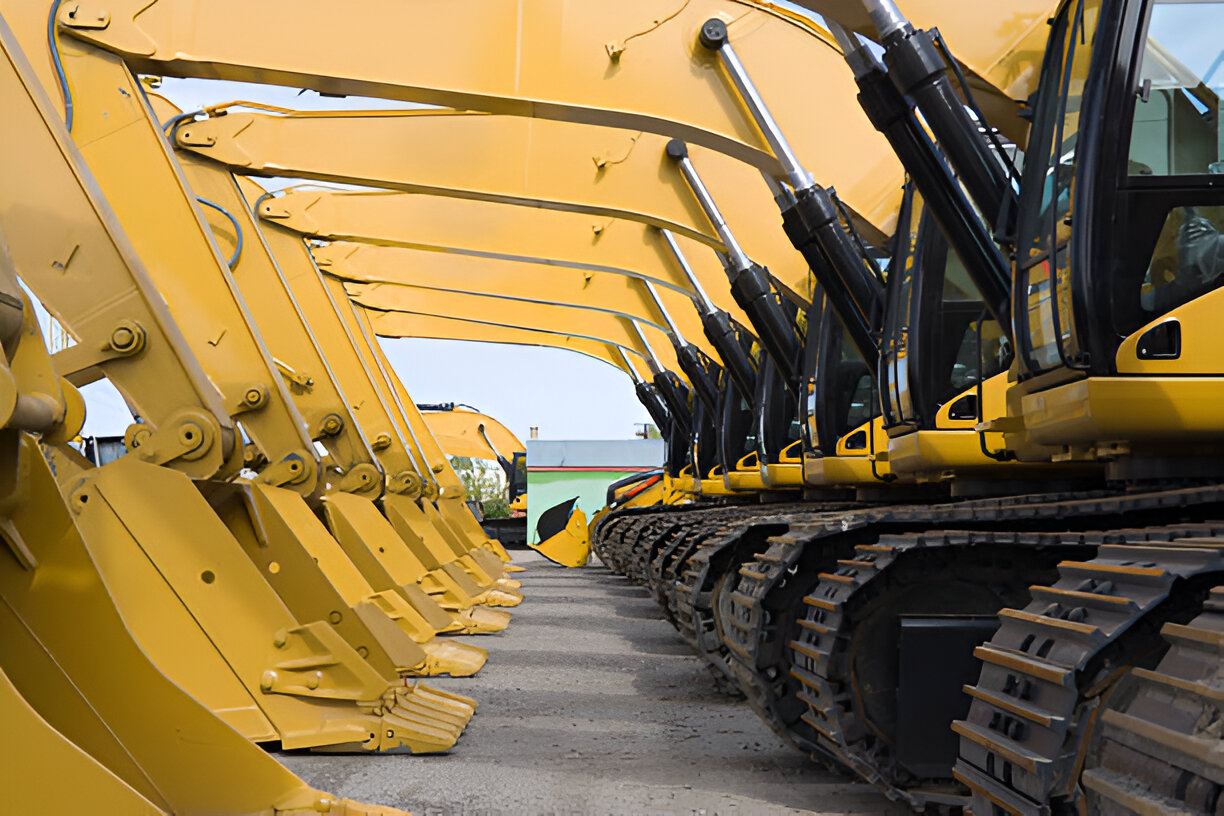
Equipment like excavators, cranes, loaders, and bulldozers allow construction companies to complete tasks that would otherwise be labor-intensive or impossible to achieve by manual labor alone. For example, a large-scale construction project, such as building a skyscraper or a bridge, requires cranes to lift heavy materials and bulldozers to prepare the land. Without this machinery, such projects would take much longer and require significantly more manpower.
Construction machinery not only helps complete projects faster but also ensures better quality. With automation, digital controls, and advanced technology, these machines help eliminate errors, ensuring precision and consistency in the work.
2. The Economic Impact of Construction Equipment
The construction equipment and machinery industry is a major contributor to the global economy. Manufacturers, suppliers, and rental companies all benefit from the production and sale of machinery, which is essential for completing infrastructure projects. The ripple effects of the construction industry’s growth extend to various other sectors, including steel, electronics, oil and gas, and logistics.
Moreover, many countries rely on construction to stimulate economic growth, especially when it comes to developing nations. The creation of roads, bridges, schools, hospitals, and other critical infrastructure projects is not only key to improving the quality of life but also to boosting job creation. By providing employment opportunities in manufacturing, operations, and maintenance, the construction equipment sector becomes an essential part of the economy.
With the increasing trend toward urbanization, there is also a growing demand for more infrastructure development. As a result, the global demand for construction machinery continues to rise, boosting revenues for equipment manufacturers and suppliers.
3. Technological Advances in Construction Equipment
The construction industry is embracing technology like never before. As equipment becomes more advanced, construction companies benefit from increased productivity and safety. Automation and robotics are now becoming integral parts of modern construction machinery, allowing for greater precision and efficiency.
For example, GPS-guided bulldozers and autonomous cranes can perform complex tasks without direct human intervention, reducing human error and increasing safety. Automation can also help optimize the construction process by allowing machinery to work around the clock without fatigue. This results in shorter project completion times, which is critical for meeting tight deadlines.
Another emerging trend is the use of smart construction equipment, which leverages data analytics and artificial intelligence (AI) to improve machine performance. Smart equipment can monitor its operations in real-time, identify potential issues before they become major problems, and optimize fuel consumption. This not only reduces maintenance costs but also minimizes environmental impact, contributing to the sustainability goals of the construction industry.
4. Environmental Considerations and Sustainability
As construction machinery continues to advance, there is an increasing focus on sustainability and reducing environmental impact. Many governments and organizations are setting regulations and standards to ensure that construction projects are more eco-friendly. Construction equipment manufacturers are responding by creating machines that are more energy-efficient, use alternative fuels, and produce fewer emissions.
Electric and hybrid construction equipment is becoming increasingly popular as it helps reduce carbon emissions on construction sites. This type of machinery not only decreases the industry’s carbon footprint but also lowers operating costs by reducing fuel consumption. Furthermore, electric machines are quieter than their diesel counterparts, reducing noise pollution and making construction sites more worker- and community-friendly.
Sustainable construction equipment also plays a role in recycling materials. For instance, concrete crushers and demolition equipment help recycle building materials, which can then be reused in other projects, promoting a circular economy in the construction sector.
5. Safety and Efficiency on Construction Sites
Safety is a primary concern on any construction site, and the use of advanced machinery significantly enhances worker protection. Modern construction equipment is designed with safety features such as collision detection systems, automated emergency brakes, and operator cabins equipped with safety restraints and ergonomic controls. These features reduce the risk of accidents and injuries, creating a safer work environment for construction workers.
In addition to improving safety, construction machinery is designed to increase the overall efficiency of construction projects. Equipment like hydraulic excavators, tower cranes, and compaction rollers enable faster and more precise work. This allows construction companies to complete their projects on time or ahead of schedule, reducing labor costs and increasing profitability.
For example, a hydraulic excavator can complete in hours what would take days using manual labor. Similarly, tower cranes can lift and place heavy materials quickly and accurately, significantly reducing the time required to transport materials to elevated heights.
6. The Role of Machinery in Large-Scale Projects
Large-scale infrastructure projects like airports, bridges, and dams would be impossible to complete without the help of heavy machinery. These massive projects require powerful machines that can move large amounts of materials, dig deep foundations, and lift heavy structures. For example, tunnel-boring machines are essential for creating underground transportation systems, and cranes are indispensable for building skyscrapers and other tall structures.
Large-scale projects also require specialized machinery that is designed to perform specific tasks. For example, pavers are used to lay asphalt on roads, while pile drivers install foundations for bridges and buildings. The versatility of construction machinery enables companies to take on projects of any size and complexity, expanding their capabilities and allowing them to operate in various sectors.
7. Machinery’s Role in Global Competition
In today’s global market, construction companies must compete not only on price but also on speed and quality. Having access to the latest and most efficient construction machinery gives companies a competitive edge. Firms that invest in modern equipment can complete projects faster, with better quality and lower costs than their competitors.
In addition, international construction projects often have strict requirements for safety, environmental standards, and technical specifications. Advanced machinery allows construction companies to meet these standards and deliver projects that adhere to international guidelines, making them more attractive to global clients and investors.
The demand for construction equipment and machinery is not only growing in developed nations but also in emerging markets where infrastructure development is booming. This increased demand is pushing construction companies to adopt the latest technologies and machinery to remain competitive in the global arena.
8. Future Trends in Construction Equipment
As the construction industry continues to evolve, so too does construction machinery. The future of the industry is likely to be dominated by further advancements in automation, robotics, and artificial intelligence. Autonomous construction vehicles that require little to no human intervention are expected to become more widespread, especially for tasks like excavation, earthmoving, and material transport.
Additionally, the use of drones for site inspection and monitoring is gaining popularity, allowing construction managers to assess progress, identify issues, and make adjustments in real-time without halting work on the ground.
The construction industry is also beginning to adopt 3D printing technologies, particularly for creating smaller components or even entire buildings. This new method of construction has the potential to revolutionize the industry by reducing waste, speeding up construction times, and cutting costs.
Conclusion
Construction equipment and machinery are fundamental to the growth and development of the construction industry. Their ability to enhance efficiency, improve safety, and reduce environmental impact has transformed the way construction projects are completed. As technology continues to evolve, the role of construction machinery will only grow, helping companies deliver projects faster, more safely, and with greater precision.
The investment in modern machinery is not only a smart business decision but a necessity for any company looking to stay competitive in the ever-evolving construction industry. Whether it’s a small-scale residential project or a massive infrastructure development, construction machinery remains at the heart of every successful construction venture.